The short answer
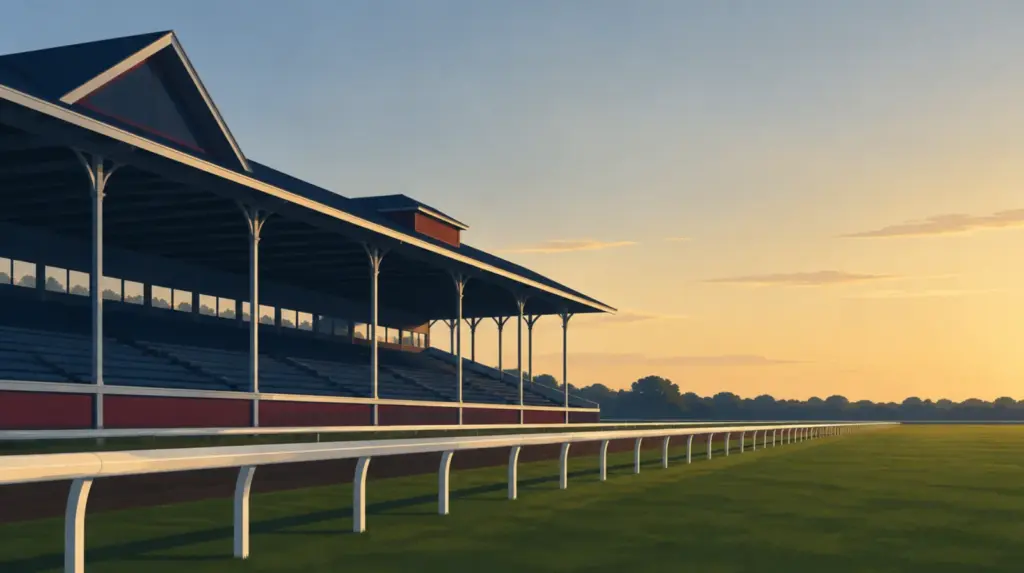
Churchill Downs is the racetrack in Louisville, Kentucky, that has staged every Kentucky Derby since 1875. It occupies 175 acres at 700 Central Avenue, has a one-mile dirt oval and a seven-furlong turf course, and its twin spires, built in 1895, are the best-known image in American racing. The track is owned by Churchill Downs Incorporated and races in spring, September and autumn, with Derby week as the centerpiece.
Churchill Downs at a glance
| Feature | Detail |
|---|---|
| Opened | 1875, with the first Kentucky Derby on 17 May |
| Address | 700 Central Avenue, Louisville, Kentucky |
| Site | 175 acres (Churchill Downs’ own figure) |
| Main track | Dirt, 1 mile around |
| Turf course | Seven furlongs |
| Twin spires | Built 1895 |
| Landmark status | National Historic Landmark since 1986 |
| Permanent lights | Installed 2010 |
| Breeders’ Cup | Hosted many times, most recently in November 2018 |
| Owner | Churchill Downs Incorporated |
| Signature races | Kentucky Derby, Kentucky Oaks, Stephen Foster, Clark Stakes |
A short history of the track
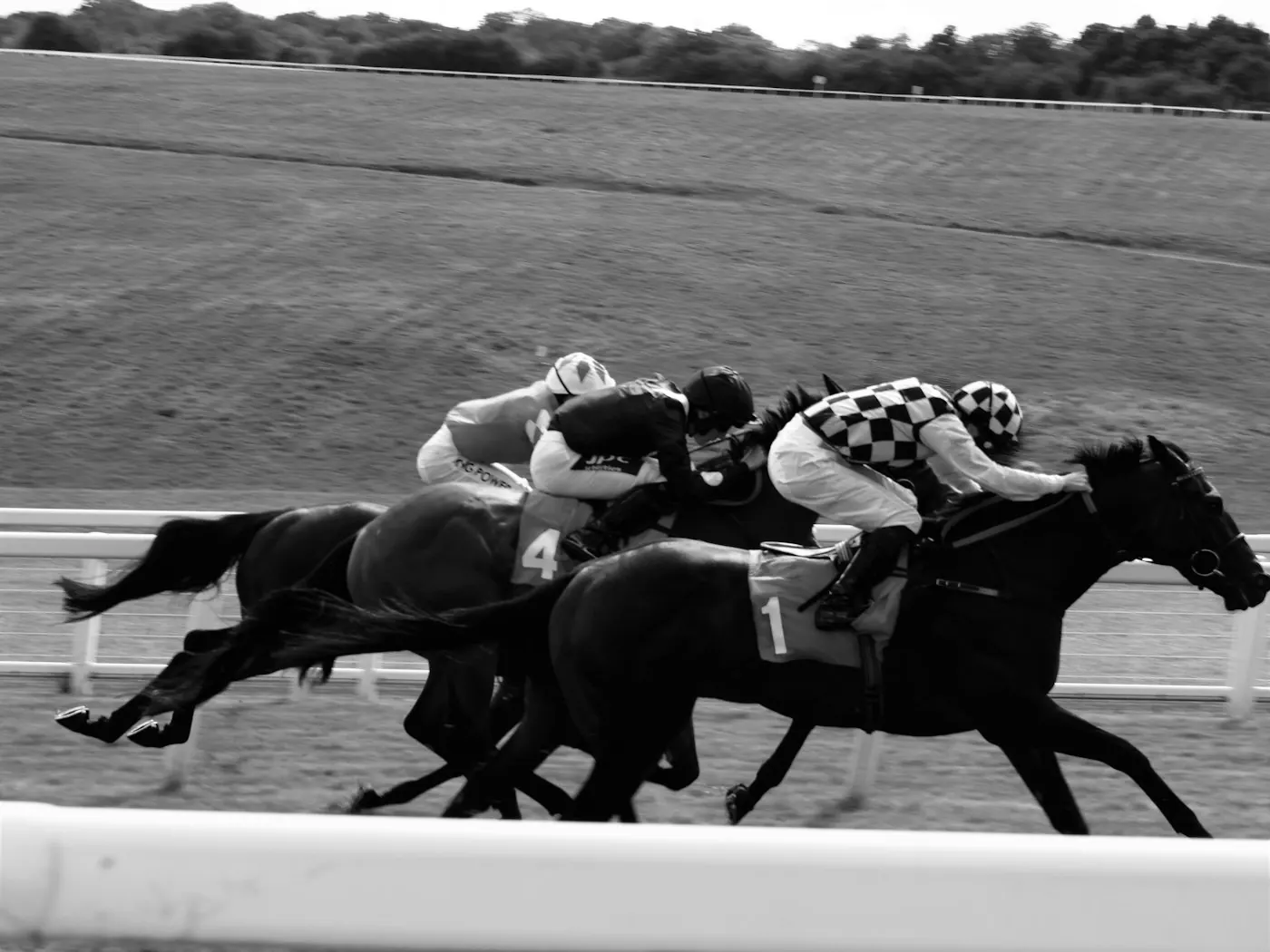
Col. Meriwether Lewis Clark Jr. founded the Louisville Jockey Club in 1874 and built the course on land leased from his uncles, John and Henry Churchill. The name “Churchill Downs” came into use later and became official in 1937. About 10,000 spectators watched the first Derby, according to the track. The early years were nonetheless difficult: crowds were good on Derby Day but thin for the rest of the meeting, and the club struggled financially through the 1880s and 1890s.
A group led by William E. Applegate took control in 1894 and commissioned a new grandstand on the opposite side of the track. Its two hexagonal spires, designed by a 24-year-old draftsman named Joseph Dominic Baldez and completed in 1895, gave the place its trademark silhouette. Lasting stability arrived in 1902, when Louisville businessman Matt Winn joined a syndicate that bought the track. Winn ran Churchill Downs for decades and made the Derby a national event, promoting the race to East Coast owners and to the newspapers.
Modern milestones include designation as a National Historic Landmark in 1986, the installation of permanent lights for night racing in 2010, and a series of large building projects. The most recent opened in 2024, when a $200 million paddock was completed in time for the 150th Kentucky Derby.
The 2023 safety crisis
Twelve horses died at Churchill Downs in the spring of 2023, several during Derby week. The company suspended racing at the track in June 2023 and moved the rest of its spring-summer meet to Ellis Park in western Kentucky while it reviewed the surfaces and safety protocols. Racing returned to Louisville that autumn. The episode is part of the reason federal rules under the Horseracing Integrity and Safety Authority attract so much attention around the Derby.
The track layout and why it matters
The Derby distance of 1¼ miles is longer than the one-mile oval, so the race starts at the top of the long home stretch. Horses pass the grandstand and the twin spires once at the start, run the full circuit, and race down the same stretch to the finish. With 20 runners, the dash to the first turn decides a lot: horses drawn on the far outside must either use energy to move in or drop back and race wide.
The main gate cannot hold 20 horses, so an auxiliary gate is placed alongside it. That arrangement is one reason the post-position draw is followed closely, although recent results suggest the draw is less decisive than its reputation; the 2026 winner, Golden Tempo, drew post 19 and, after scratches moved the field in, broke from stall 16 near the outside.
The turf course sits inside the dirt track and hosts grass races during the meets, including several stakes on Oaks and Derby days. For bettors, track condition matters on both surfaces. A dirt track listed as sloppy or muddy after rain can change which horses are competitive, as it did when Super Saver won in the slop in 2010.
Derby Day at Churchill Downs
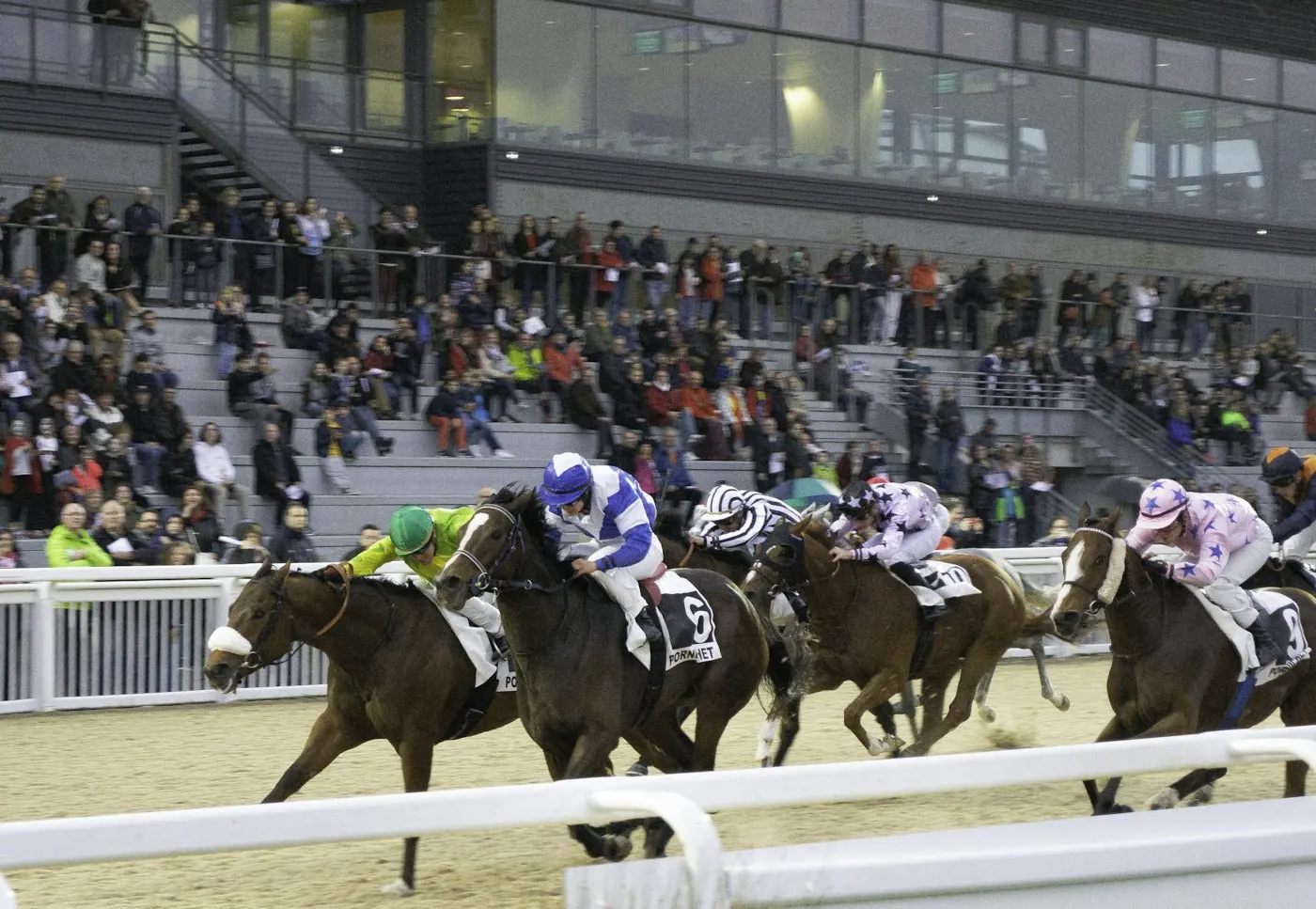
Derby Day is a full card that starts late in the morning. In 2025 the first race went off at 11 a.m. ET and the Derby was race 12 of 14, with a 6:57 p.m. ET post. For 2027 KentuckyDerby.com gives an approximate post time of 6:57 p.m. ET for the 153rd running on 1 May.
Crowds are enormous. The Courier Journal put 2026 attendance at 150,415, and the record, set in 2015, is above 170,000. The 1974 Derby drew 163,628, a record at the time, together with a 23-horse field that led to the 20-starter limit used today. Seating ranges from the infield, where most people never see the race except on screens, to grandstand and clubhouse seats, Millionaires Row and private suites. Ticket prices vary hugely by area and are sold through Churchill Downs’ official channels.
Traditions you will see
- The singing of “My Old Kentucky Home” as the horses come on to the track for the post parade.
- Mint juleps: KentuckyDerby.com says more than 125,000 are served over Oaks and Derby days.
- The garland of more than 400 red roses draped over the winner, the origin of the “Run for the Roses” nickname.
- Hats, worn in every part of the grounds from the infield to the suites.
The Friday before the Derby is Kentucky Oaks day, when fillies race for their own championship. Many Louisville locals prefer Oaks day for its slightly smaller crowds and its own traditions, including pink outfits worn in support of women’s health causes.
Betting at the track
Churchill Downs takes bets at mutuel windows staffed by tellers and at self-service terminals throughout the grounds. Straight bets start at $2, and exotics can be played for as little as 10 or 50 cents per combination, according to the track’s wagering guide. On Derby Day itself the superfecta minimum rises to $1. Queues before the big race can be long, so experienced visitors bet the Derby early. The guide to betting the Derby legally explains how to call a bet at the window and how the same pools are reached online, and the bet types page shows what each ticket costs.
Visiting outside Derby week
Churchill Downs has three race meetings: a spring meet that opens about a week before the Derby, a September meet added in 2013, and a fall meet that runs from late October to around Thanksgiving weekend. Ordinary race days are a very different experience from the Derby, with easy parking, cheap admission and room at the rail. Behind the scenes, the backside barns house more than 1,400 horses a year, and early-morning training is the clearest view of how racehorses are prepared for a race.
The Kentucky Derby Museum, on the grounds next to the track, is open year-round and tells the story of the race, its horses and its people, including the Black jockeys who dominated the early Derbies. It is the best starting point for anyone who wants to understand why the race matters so much in Kentucky.
The company behind the track
Churchill Downs Incorporated, the publicly listed owner, has grown from a single racetrack into a racing, online wagering and gaming business. Its TwinSpires platform is the official betting partner of the Derby and handled a record $129 million on Churchill Downs races during Derby Week 2026, according to the Thoroughbred Daily News. All-sources wagering on the 2026 Derby card reached $340 million. Those numbers explain why the company invests so heavily in the track and in Derby week.
For the history of the race itself, see our Kentucky Derby history page; for the 2027 qualifying races, the Road to the Kentucky Derby; and for the 2027 overview, the home page.
Churchill Downs FAQ
Where is Churchill Downs?
At 700 Central Avenue in south Louisville, Kentucky. The track says it occupies 175 acres, and it has hosted the Kentucky Derby since the first running in 1875.
How long is the track at Churchill Downs?
The main dirt track is one mile around, and the turf course inside it is a seven-furlong loop. The Derby, at 1¼ miles, starts in the stretch so the field passes the grandstand twice.
When were the twin spires built?
In 1895, as part of a new grandstand commissioned by the track's owner at the time, William E. Applegate. They have become the symbol of the track and of the Derby.
Can you visit Churchill Downs outside Derby week?
Yes. The track races in spring, in September and in the autumn, and the Kentucky Derby Museum on the grounds is open to visitors with exhibits on the race's history.
How many people attend the Kentucky Derby?
Around 150,000 in recent years; the Courier Journal reported 150,415 for the 2026 Derby. The attendance record was set at the 141st Derby in 2015, when more than 170,000 people were present.
Sources
- Churchill Downs: about the track (175 acres, seven-furlong turf course, Baldez spires, lights 2010)
- Wikipedia: Churchill Downs (site, track dimensions, history)
- KentuckyDerby.com: about the Derby (spires, traditions, attendance)
- KentuckyDerby.com: 153rd Derby date and post time
- Churchill Downs: wagering guide
- America's Best Racing: 2025 Derby Day card and minimums
- Thoroughbred Daily News: 2026 Derby Day handle
- Wikipedia: 2026 Kentucky Derby
- Courier Journal: 2026 Derby betting records and attendance
- Kentucky Derby Museum
- Covers: 2026 Kentucky Derby post positions (Golden Tempo drew 19, broke from 16)