The short answer
Horse racing betting comes down to three skills: reading past performances to judge each horse’s ability and form, understanding odds so you know what a price means, and knowing the rules that change a race late, such as scratches and track condition. This page covers all three for US Thoroughbred racing, using the Kentucky Derby as the running example, and ends with the myths that cost new bettors the most money.
How American Thoroughbred racing is organized
Races in the US are grouped by class, and knowing the class ladder is the first step in comparing horses.
| Race type | Who runs | What it tells you |
|---|---|---|
| Maiden claiming | Horses that have never won, available to be claimed (bought) at a set price | The lowest level of competition |
| Maiden special weight | Non-winners not for sale | Where most well-bred prospects start |
| Claiming | Winners entered for a claiming price | The price is a direct measure of the level |
| Allowance and optional claiming | Horses meeting set conditions (for example, non-winners of two races) | A step between claiming and stakes |
| Stakes | Horses whose owners pay nomination and entry fees | The best races at a meeting |
| Graded stakes (Grade 3, 2, 1) | Top horses in the country | Grade 1, like the Kentucky Derby, is the highest level |
Distances are measured in furlongs, eighths of a mile. A sprint is usually under a mile; routes are a mile or more. The Derby, at 1¼ miles (10 furlongs), is the first time most of its runners have gone that far. Surfaces are dirt, turf (grass) or synthetic, and many horses prefer one clearly over the others.
Reading past performances
Past performances, often shortened to PPs, are the record of each horse’s recent races printed in a program or shown on an ADW. Each line is one race. Formats differ slightly between Equibase, Daily Racing Form and the ADW apps, but the core data are the same.
A sample line, decoded
Imagine a three-year-old’s most recent start reads like this: 27Mar27 GP, 1⅛ miles, fast, Florida Derby (G1), post 7, running positions 9-8-5-3-2, beaten a neck, speed figure 98, odds 7.40, jockey and weight. Broken down:
- Date and track: 27 March 2027 at Gulfstream Park, about five weeks before the Derby, which is a normal gap.
- Distance and condition: 1⅛ miles on a fast dirt track, the closest common prep distance to the Derby’s 1¼ miles.
- Class: a Grade 1 race worth 100 points on the Road to the Kentucky Derby.
- Running positions: ninth early, eighth, fifth, third in the stretch, second at the finish. The horse closes from behind, which matters if the Derby pace looks fast.
- Margin: beaten a neck, so very close to winning.
- Speed figure: a single number that rates the performance after adjusting for track speed. Compare it with other horses’ figures in comparable races rather than reading it in isolation.
- Odds 7.40: the public made the horse about 7-1, a fair indication it was respected but not the favorite.
Below the race lines you will find workouts: date, track, distance, time and a ranking, with a bullet symbol marking the fastest work of the day at that distance. Regular, steady works show a horse in training; a long gap can signal a setback.
What to compare across the field
- Class: has the horse run well at this level before?
- Distance: has it won or run close at a similar trip?
- Surface and condition: how does it handle dirt, and does it have form on a wet track?
- Pace: does it lead, press or close? Several front-runners in one race usually help closers.
- Form cycle: are the speed figures rising, flat or falling over the last three starts?
- Connections: the trainer’s and jockey’s record with this type of runner.
A ten-minute routine for one race
Time is the main constraint for most bettors, so a fixed routine helps. Spend two minutes on class and distance, ruling out horses that look outmatched or untested at the trip. Use three minutes on the last three past-performance lines of the remaining runners, noting speed figures and running styles. Take two minutes to sketch the pace. In the final three minutes, compare your shortlist with the morning line or live odds and decide whether any horse is a better price than you expected. If none is, passing the race is a perfectly good decision; there is always another one, and skipping races where you have no edge is one of the habits that separate careful bettors from the rest.

Odds, the morning line and implied chances
US tote odds are shown as a profit-to-stake ratio. At 7-2 a horse returns $7 profit for every $2 bet, so a $2 ticket pays $9.00 back in total, before breakage. Odds below even money appear as fractions such as 4-5, where a $2 ticket returns $3.60.
Dividing the stake by the total return gives the chance the price implies. A horse at 7-2 is priced as a 22.2% chance ($2 divided by $9); one at 4-5 as 55.6%. In a three-horse race priced 4-5, 7-2 and 9-2, those chances add up to 55.6% + 22.2% + 18.2% = 96%, which looks like a gift. In a real pari-mutuel race the total normally comes out well above 100%, because the takeout comes out of every pool before winners are paid.
The morning line
The morning line is published with the entries, before a single bet is made. It is the track oddsmaker’s forecast of how the public will bet, not a judgement of each horse’s true chance. Golden Tempo was a longshot on the 2026 Derby morning line and still won at 23-1, a reminder that the line is only a forecast. Use the line to see which horses the market is expected to favor, then watch the live odds for horses attracting more or less money than forecast.
Late money
Much of the money in big pools arrives in the final minutes, and tote odds keep changing until the gates open and the pools close. The price you see when you bet is not the price you get. Large late moves can reflect informed money, but they can also be noise from big bettors moving the pool; do not treat them as a tip.
Pace: the shape of the race
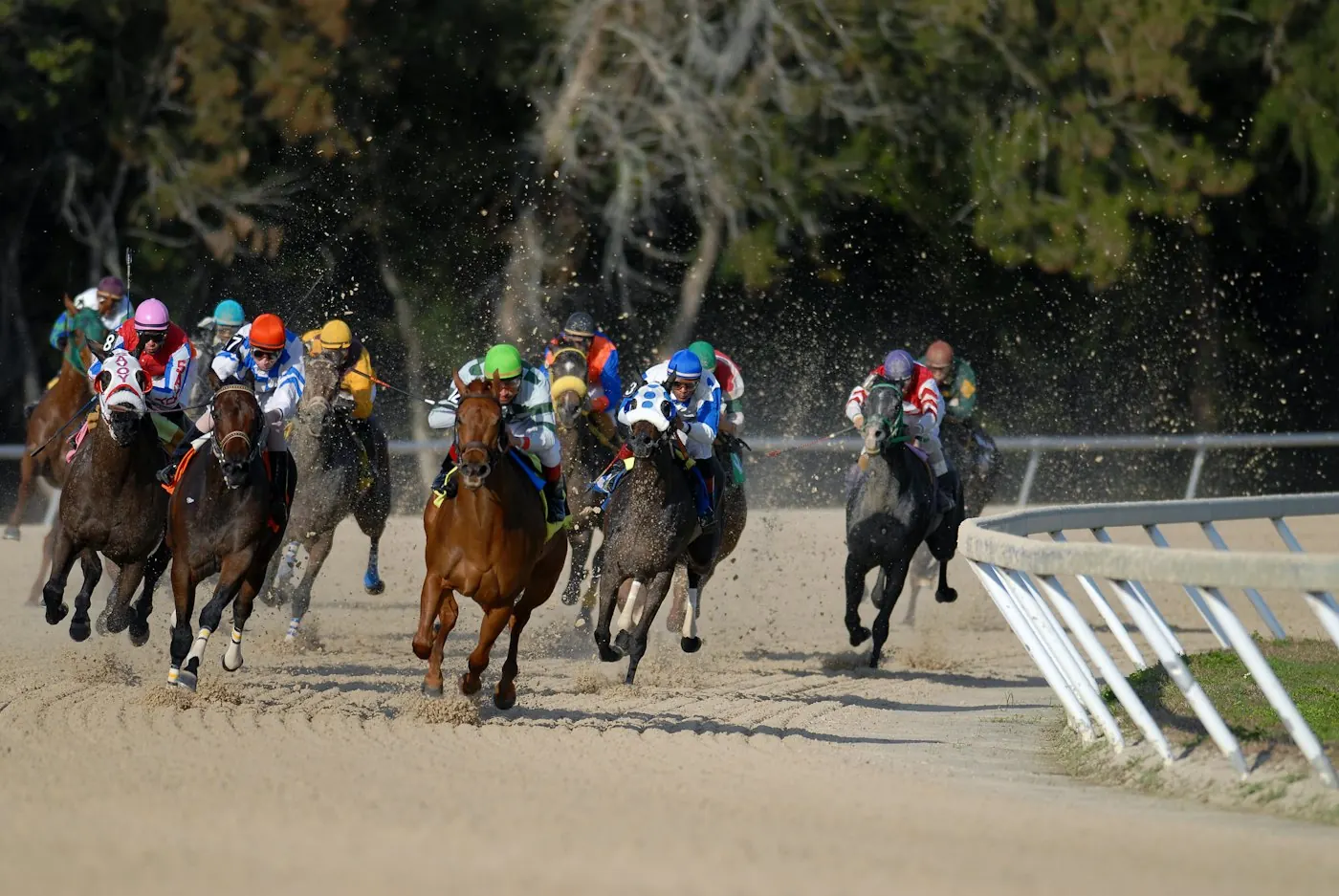
Pace analysis asks a simple question: who will be in front early, and how fast will they go? Past performances show each horse’s position at the first and second calls, which is enough to label it as a front-runner, a presser that sits just behind, a stalker in mid-pack or a deep closer.
When several front-runners meet, they tend to push each other into fast early fractions and tire late, which sets the race up for closers. When only one horse wants the lead, it may be allowed to set slow fractions and still have energy left at the end. Large Derby fields usually contain several speed horses, which is one reason late runners such as Golden Tempo in 2026 and Mine That Bird in 2009 have won from far back. Sketching the likely pace before you bet takes five minutes and often changes which horses you prefer.
Trainers, jockeys and changes
People matter as much as numbers. Some trainers excel with horses returning from a break; others have strong records with first-time starters or with horses moving up in class. Jockey changes deserve attention too: a switch to a leading rider for a big race signals intent, while a late switch caused by injury can mean nothing at all about the horse. Equipment changes listed in the program, such as blinkers on or off, and medication notes are also worth checking.
Keep a simple record
Most bettors remember their winners and forget their losers. A plain spreadsheet with the date, race, bet type, stake, return and a one-line reason for each bet shows within a few weeks whether a particular approach is working. It also gives you the figures you need for tax purposes if you collect a large payout. ADW account histories help, but your own notes on why you made each bet are what improve your handicapping.
Scratches, also-eligibles and late changes
A scratch is the withdrawal of a horse after entries close. It can happen days before the race or minutes before post, often because a veterinarian is not satisfied with the horse’s condition. The consequences for your bets depend on the bet type:
| Your bet | If your horse is scratched |
|---|---|
| Win, place or show | Refunded |
| Exacta, trifecta, superfecta | Combinations including the horse are refunded; the rest stay live |
| Daily Double, Pick 3 to Pick 6 | Often switched to the post-time favorite in that leg; rules vary by track |
| Future wager | No refund |
Big races also have an also-eligible list: extra entrants who can draw into the field if a horse in the main body is scratched before a deadline. That is how Rich Strike reached the 2022 Kentucky Derby, which he won at 80-1. Other late changes to check are jockey switches, equipment changes such as first-time blinkers, and surface changes when rain moves a turf race to the dirt.
Track condition codes
| Surface | Codes, driest to wettest |
|---|---|
| Dirt | ft (fast), gd (good), my (muddy), sy (sloppy); wf (wet fast) for a track with standing water but a firm base |
| Turf | fm (firm), gd (good), yl (yielding), sf (soft) |
Some horses improve on a wet track and others hate it. Super Saver won the 2010 Derby on a sloppy surface; pedigree and past wet-track lines give clues before a rainy Derby Day.
Where racing came from
Organised racing grew up in England. Newmarket became the sport’s headquarters in the 17th century under James I and Charles II, and the Thoroughbred breed traces back to three Eastern stallions imported in the late 1600s and early 1700s: the Byerley Turk, the Darley Arabian and the Godolphin Arabian. English colonists brought racing to America, where a course was laid out on Long Island in 1665. Kentucky’s limestone-rich pastures turned the state into the center of American breeding in the 19th century, and the Kentucky Derby, modelled on England’s Epsom Derby, followed in 1875. The full story of the race is on our Kentucky Derby history page.
What kind of racing bettor are you?
Most people fit one of four profiles, and each carries different risks.
- The once-a-year fan bets the Derby for fun. The main risk is overspending on the day; set a fixed amount and stick to straight bets or small exactas.
- The favorite backer wants frequent wins. Favorites cash often but at short prices, and the takeout means steady small wins rarely add up to a profit.
- The exotic player builds trifectas and Pick 4s for big payouts. Long losing runs are normal, so the bankroll has to be sized for them. Our bet types guide shows the cost of each structure.
- The handicapper studies PPs, pace and speed figures. This is the only approach with a chance of long-term success, and it takes real time; even then most players lose.
Whichever you are, the rewards are entertainment, the challenge of the puzzle and the occasional big payout. The risks are real money lost and, for some people, gambling that stops being fun. Help is listed on our responsible gambling page.
Five betting misconceptions
“It is all luck”
Luck plays a big part in any single race: traffic, a bad start or a stumble can undo the best horse. Over hundreds of races, though, form, class and pace analysis do separate good handicappers from poor ones. The catch is that the pool already reflects the public’s analysis, so beating it takes more than average skill.
“The favorite usually wins”
Favorites win more often than any other betting position, yet they still lose most races. A 2-1 favorite is priced to lose two times in three.
“A system or tipster can guarantee profit”
No one can. Pari-mutuel pools return less than they take in, and anyone with a guaranteed winning method would bet it rather than sell it.
“Bet more to win back losses”
Raising stakes after losses is the quickest way to turn a bad day into a serious problem. Each race is independent of the last.
“Offshore sites pay better odds”
Some offshore books advertise fixed odds or bonuses, but they are not licensed by US racing regulators and their terms can void bets or cap payouts. Licensed ADWs pay from the official pools. Our page on crypto and offshore racing platforms explains the risks.
Putting it together on Derby Day
Start with the field list and the Road to the Kentucky Derby results to see where each horse earned its points. Read the last three PPs for each runner, mark the likely pace, then compare your view with the morning line and the live odds. Choose your bets last and price the tickets before you buy. For the legal ways to place them, see how to bet on the Kentucky Derby, and for the 2027 race overview, the home page.
Horse racing basics: FAQ
What is the morning line in horse racing?
It is the track oddsmaker's forecast of how the public will bet each horse, published with the entries before betting opens. It is not a rating of the horses, and the real odds are set by the money in the pool.
How do I read horse racing past performances?
Read each line as one previous race: date and track, distance and surface, the track condition, the class of race, the horse's position at each call, its finishing position and margin, a speed figure, the odds and the jockey. Compare the last three lines with today's race conditions.
What happens to my bet if a horse is scratched?
A win, place or show bet on a scratched horse is refunded. In exactas and trifectas, combinations that include it are refunded. In multi-race bets many tracks substitute the post-time favorite, so check the house rules.
What do the letters ft, sy and fm mean?
They are track condition codes. On dirt, ft means fast, gd good, my muddy and sy sloppy. On turf, fm means firm, gd good, yl yielding and sf soft. Some horses run very differently on wet or soft ground.
What does a claiming race mean?
Horses in a claiming race are entered at a stated claiming price, and a licensed buyer can usually claim (buy) them for that price before the race, subject to the race conditions. Claiming prices tell you the level of the race: a $10,000 claimer is far below a Grade 1 stakes such as the Kentucky Derby.
Is there a horse racing system that always wins?
No. Pari-mutuel pools pay out less than they take in because of the takeout, so the average bettor loses over time. Some skilled handicappers profit, but no published system guarantees it.