
The short answer
The Kentucky Derby is a 1¼-mile race on dirt for three-year-old Thoroughbreds, held at Churchill Downs in Louisville on the first Saturday in May. First run on 17 May 1875, it is the oldest leg of the US Triple Crown, and the 2027 edition on 1 May will be the 153rd. Below are the facts that matter: how the race began, how its conditions work, its records and the winners who rewrote them.
Kentucky Derby key facts
| Fact | Detail |
|---|---|
| Founded by | Col. Meriwether Lewis Clark Jr., 1874 |
| First running | 17 May 1875; Aristides, ridden by Oliver Lewis, beat 14 rivals |
| Original distance | 1½ miles (until 1895) |
| Current distance | 1¼ miles, since 1896 |
| Age and weights | Three-year-olds only; 126 lb for colts and geldings, 121 lb for fillies |
| Starters | Maximum 20 |
| Race record | 1:59.40, Secretariat, 1973 |
| Longest-priced winner | Donerail, 91-1, 1913 |
| Most wins, jockey | 5: Eddie Arcaro and Bill Hartack |
| Most wins, trainer | 6: Ben A. Jones and Bob Baffert |
| Winner’s trophy and garland | Gold trophy; a garland of more than 400 red roses |
| Next running | 153rd, Saturday 1 May 2027 |
How the Derby began
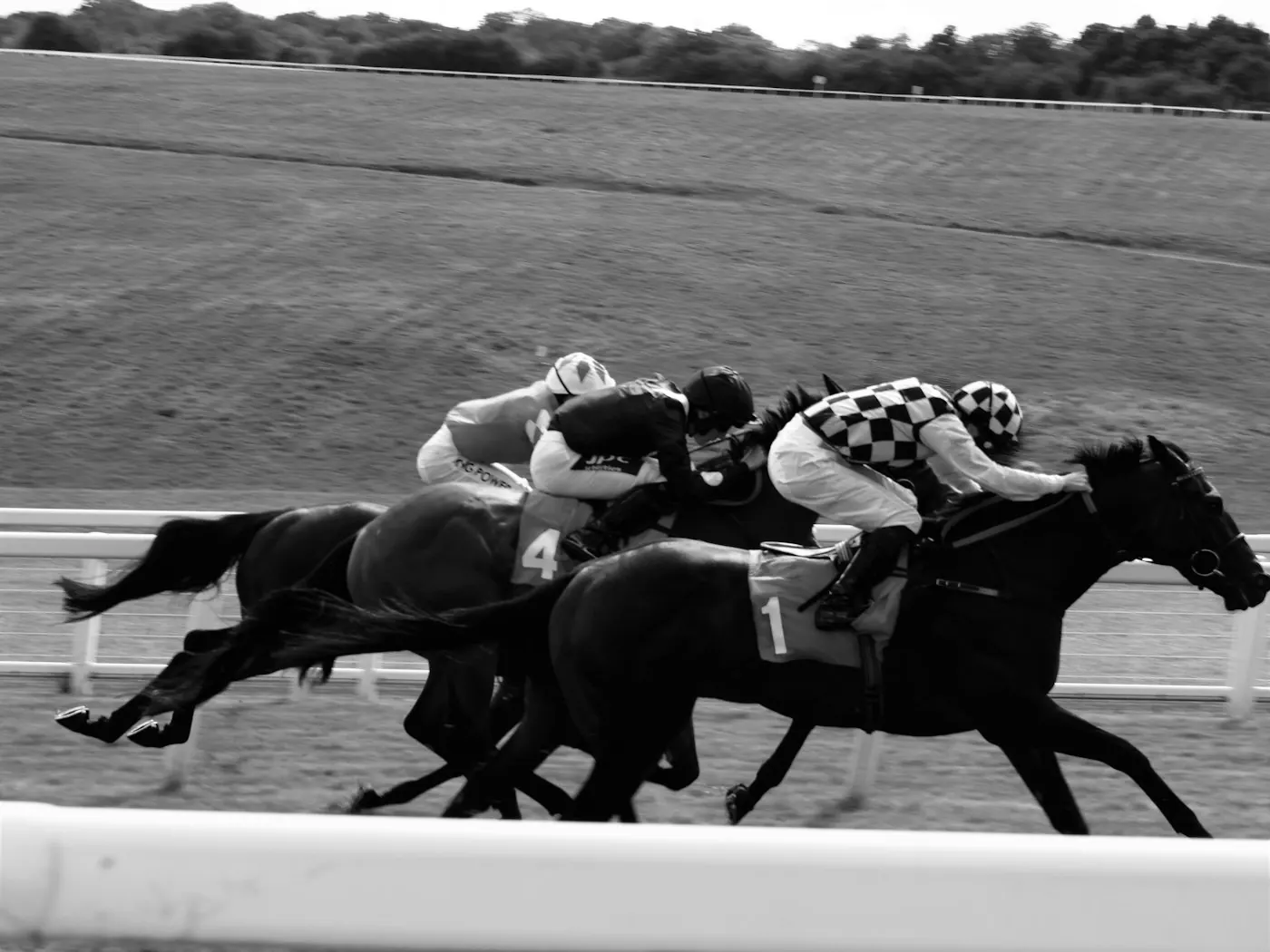
Meriwether Lewis Clark Jr., grandson of the explorer William Clark, travelled to England and France in the early 1870s and came home wanting a showcase race for American three-year-olds modelled on the Epsom Derby. He formed the Louisville Jockey Club in 1874 and built a track on land leased from his uncles, John and Henry Churchill, whose name the track later took.
Fifteen horses lined up for the first Derby on 17 May 1875. Aristides won by two lengths under Oliver Lewis, an African American jockey; 13 of the 15 riders that day were Black, according to the Kentucky Derby Museum. Black jockeys won 15 of the first 28 runnings, including Isaac Murphy’s three victories (1884, 1890 and 1891) and Jimmy Winkfield’s back-to-back wins in 1901 and 1902. By the 1920s they had been pushed out of the sport, and no Black jockey has won the race since Winkfield.
The early decades were financially shaky. Matt Winn, who put together a syndicate to take over the track in 1902, is credited with turning the Derby into a national event, partly by promoting pari-mutuel betting when bookmaking was banned in Louisville in 1908. Racing writers soon gave the race its nickname: “The Run for the Roses” is usually credited to the New York columnist Bill Corum in the 1920s.
Race conditions: who can run and how
Only three-year-olds can enter, so each horse gets exactly one chance. Owners must nominate horses by paying fees during the season, and the starting places go to the top 18 on a points table built from more than 30 qualifying races, plus invitations for horses from Japan and from Europe and the Middle East. The field has been limited to 20 since a 23-horse crowd in 1974 made the start dangerous; that year also drew a then-record 163,628 spectators.
Weights are fixed rather than handicapped. Colts and geldings carry 126 pounds and fillies 121, a five-pound allowance that recognises the physical gap at that age. The start uses a main gate plus an auxiliary gate placed alongside it, because no standard starting gate holds 20 horses.
The full qualifying system for 2027, race by race, is on our Road to the Kentucky Derby page.
Derby records worth knowing
Speed
Secretariat ran each quarter-mile faster than the one before in 1973 and stopped the clock at 1:59.40, a mark no horse has touched in more than half a century. Monarchos came closest with 1:59.97 in 2001. Most modern Derbies finish between 2:01 and 2:04, depending on the track surface and pace; Golden Tempo’s 2026 win took 2:02.27 on a fast track.
Odds
Donerail paid $184.90 for a $2 win ticket at 91-1 in 1913, still the longest price in Derby history. Rich Strike’s 80-1 win in 2022 is second, and it came after he drew in from the also-eligible list just a day before the race.
Margins and disqualifications
The 2019 Derby produced the first on-track disqualification of a first-place finisher: stewards placed Maximum Security 17th for interference, and Country House, a 65-1 shot, was declared the winner. In 2021 the Kentucky Horse Racing Commission disqualified Medina Spirit months after the race because of a positive test for betamethasone, and Mandaloun was declared the winner in February 2022.
People
Eddie Arcaro and Bill Hartack share the riding record with five wins each. Ben A. Jones of Calumet Farm and Bob Baffert have trained six winners apiece. In 2026 Cherie DeVaux became the first woman to train the winner, with Golden Tempo, while Diane Crump had been the first woman to ride in the race in 1970.
The three fillies who beat the colts
Regret won in 1915 for owner Harry Payne Whitney and was the only filly to win for 65 years. Genuine Risk ended that wait in 1980, and Winning Colors led all the way in 1988 for trainer D. Wayne Lukas. Fillies rarely run now, since most top three-year-old fillies are aimed at the Kentucky Oaks on the Friday instead.
The Triple Crown connection
The Derby is the first of three races for three-year-olds, followed by the Preakness Stakes in Maryland and the Belmont Stakes in New York. Sweeping all three within about five weeks is the hardest feat in American racing.
| Year | Triple Crown winner | Jockey |
|---|---|---|
| 1919 | Sir Barton | Johnny Loftus |
| 1930 | Gallant Fox | Earl Sande |
| 1935 | Omaha | Willie Saunders |
| 1937 | War Admiral | Charles Kurtsinger |
| 1941 | Whirlaway | Eddie Arcaro |
| 1943 | Count Fleet | Johnny Longden |
| 1946 | Assault | Warren Mehrtens |
| 1948 | Citation | Eddie Arcaro |
| 1973 | Secretariat | Ron Turcotte |
| 1977 | Seattle Slew | Jean Cruguet |
| 1978 | Affirmed | Steve Cauthen |
| 2015 | American Pharoah | Victor Espinoza |
| 2018 | Justify | Mike Smith |
A 37-year drought separated Affirmed and American Pharoah. In between, 13 horses won the Derby and the Preakness but failed to complete the sweep, most of them beaten in the Belmont, which is a quarter-mile longer than the Derby.
Traditions on Derby Day
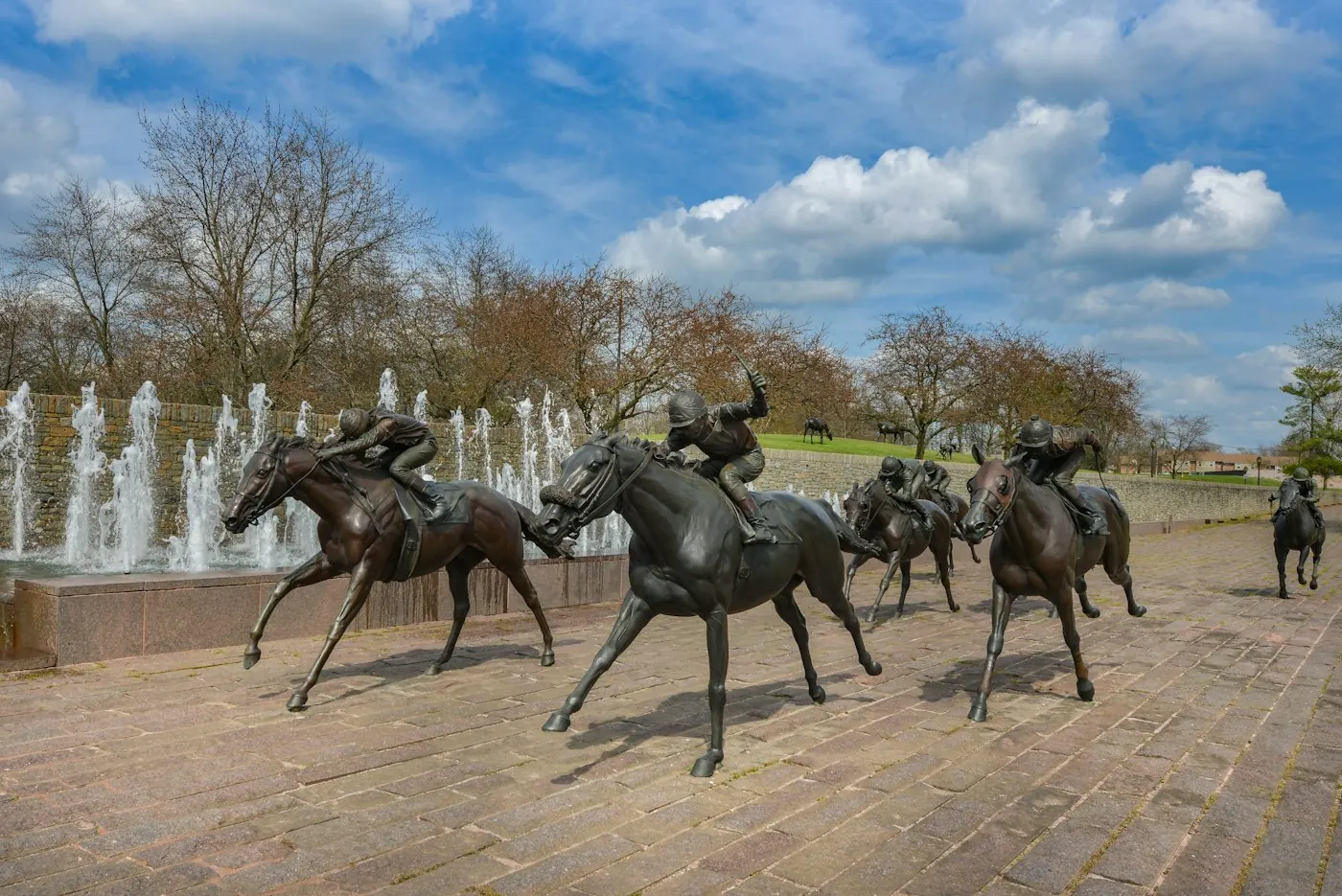
The post parade is accompanied by the crowd singing “My Old Kentucky Home”, a ritual dating to the 1920s. The official drink is the mint julep: KentuckyDerby.com says more than 125,000 are served across Oaks and Derby days, made with over 10,000 bottles of bourbon, 2,250 pounds of fresh mint and 475,000 pounds of ice. Hats are a fixture in the stands, and the winner is draped in a garland of more than 400 red roses, which is where the nickname comes from.
The twin spires that appear on every broadcast were built in 1895, one year before the race moved to its current distance. More on the track itself is on our Churchill Downs page.
What history tells a bettor
Records are entertaining, but some history is useful for betting. Favorites have a mixed Derby record, partly because 20-horse fields produce traffic problems that smaller races do not. Longshots of 20-1 or more have won several recent editions: Mine That Bird (50-1) in 2009, Country House in 2019, Rich Strike in 2022 and Golden Tempo at 23-1 in 2026. That pattern is one reason exotic pools such as trifectas and superfectas are so large on Derby Day.
None of that makes a longshot a smart bet on its own. Each runner’s past performances, the pace setup and the draw count for more than any trend. Our horse racing basics guide shows how to read a past-performance line, and the bet types guide shows how much an exacta or trifecta costs before you build one. If you want the practical side of placing a bet legally, start with how to bet on the Kentucky Derby, or go back to the site’s front page for the 2027 overview.
Kentucky Derby questions answered
How long is the Kentucky Derby?
The Derby is run over 1¼ miles (10 furlongs) on dirt. It was 1½ miles from 1875 until 1895 and was shortened to its present distance in 1896.
What is the fastest Kentucky Derby ever run?
Secretariat's 1:59.40 in 1973 is still the race record. Monarchos, in 2001, is the only other winner to break two minutes, with 1:59.97.
How many fillies have won the Kentucky Derby?
Three: Regret in 1915, Genuine Risk in 1980 and Winning Colors in 1988. Fillies carry 121 pounds against 126 for colts and geldings.
How many horses have won the Triple Crown?
Thirteen. The list runs from Sir Barton in 1919 to Justify in 2018, and every one of them started by winning the Kentucky Derby.
Has the Kentucky Derby ever been moved from May?
Yes. It was run on 9 June in 1945 after a wartime racing ban was lifted, and on 5 September in 2020 because of the Covid-19 pandemic. Otherwise it has been held in spring every year since 1875.
What was the biggest upset in Derby history?
Donerail won at 91-1 in 1913, the longest price of any Derby winner. Rich Strike, who only got into the 2022 field after a late scratch, is second at 80-1.
Sources
- KentuckyDerby.com: about the Kentucky Derby (history, traditions, records)
- KentuckyDerby.com: past winners
- KentuckyDerby.com: points system
- Kentucky Derby Museum: African American jockeys in the Derby
- Wikipedia: Kentucky Derby (records, Triple Crown, filly winners)
- Wikipedia: 2026 Kentucky Derby
- Wikipedia: Churchill Downs